
Tangkahan sits where two rivers meet on the eastern edge of Gunung Leuser National Park, and its story starts with the same problem it now helps solve: illegal logging.
From logging village to conservation area
Through the 1980s and 90s, Tangkahan's economy ran largely on illegal logging inside the park. In 2001, the local community agreed to stop, formed the Tangkahan Tourist Institute, and set up a Conservation Response Unit (CRU), built around a small herd of rescued elephants.
The Conservation Response Unit
The elephants of the CRU were rescued from human-elephant conflict, not captured from the wild for tourism. Alongside their mahouts, they patrol the forest to deter illegal logging and poaching, and help guide wild elephant herds away from populated areas to reduce dangerous encounters. Ecotourism activities, added from 2004 onward, now fund a large part of that conservation work.
What our excursion looks like
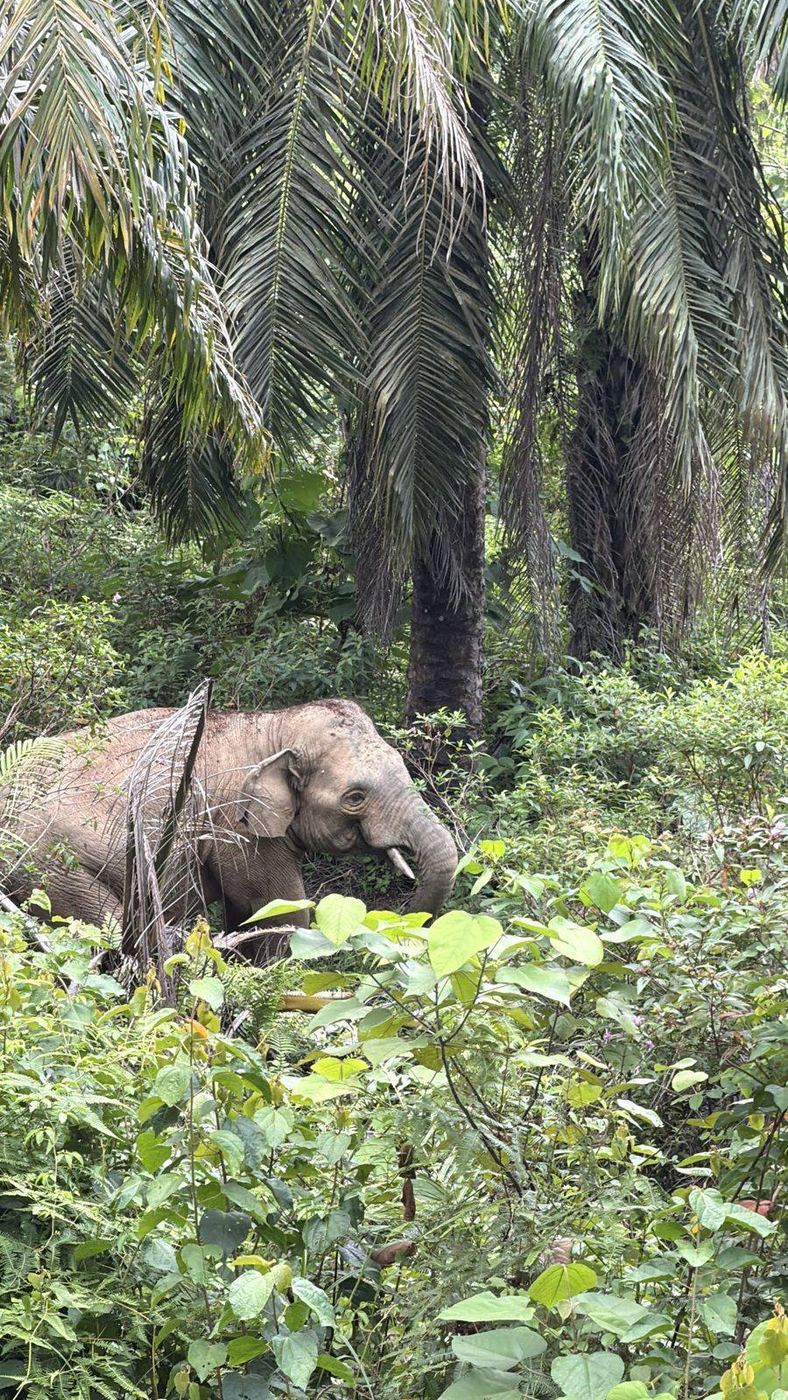
We follow a ranger through the forest, hoping to cross paths with wild elephants, though there's never a guarantee. We keep our distance throughout: no touching, no feeding, no bathing them. It's the same principle behind our orangutan treks: observe without interfering.
Beyond the elephants
Tangkahan is quieter and less developed than Bukit Lawang, with hot springs, caves, and wild orangutans in the surrounding forest for those who want to extend the visit beyond the elephant patrol.
Tangkahan works well as a day excursion alongside a Bukit Lawang trek, or as a standalone add-on if elephants are the main draw.