
Half day · about 4 hours
Batu Katak
A flower that spends years underground and blooms for only two or three days: the Rafflesia and the Titan arum both grow wild around this small village.
A flower that waits years to bloom
Rare, and easy to miss
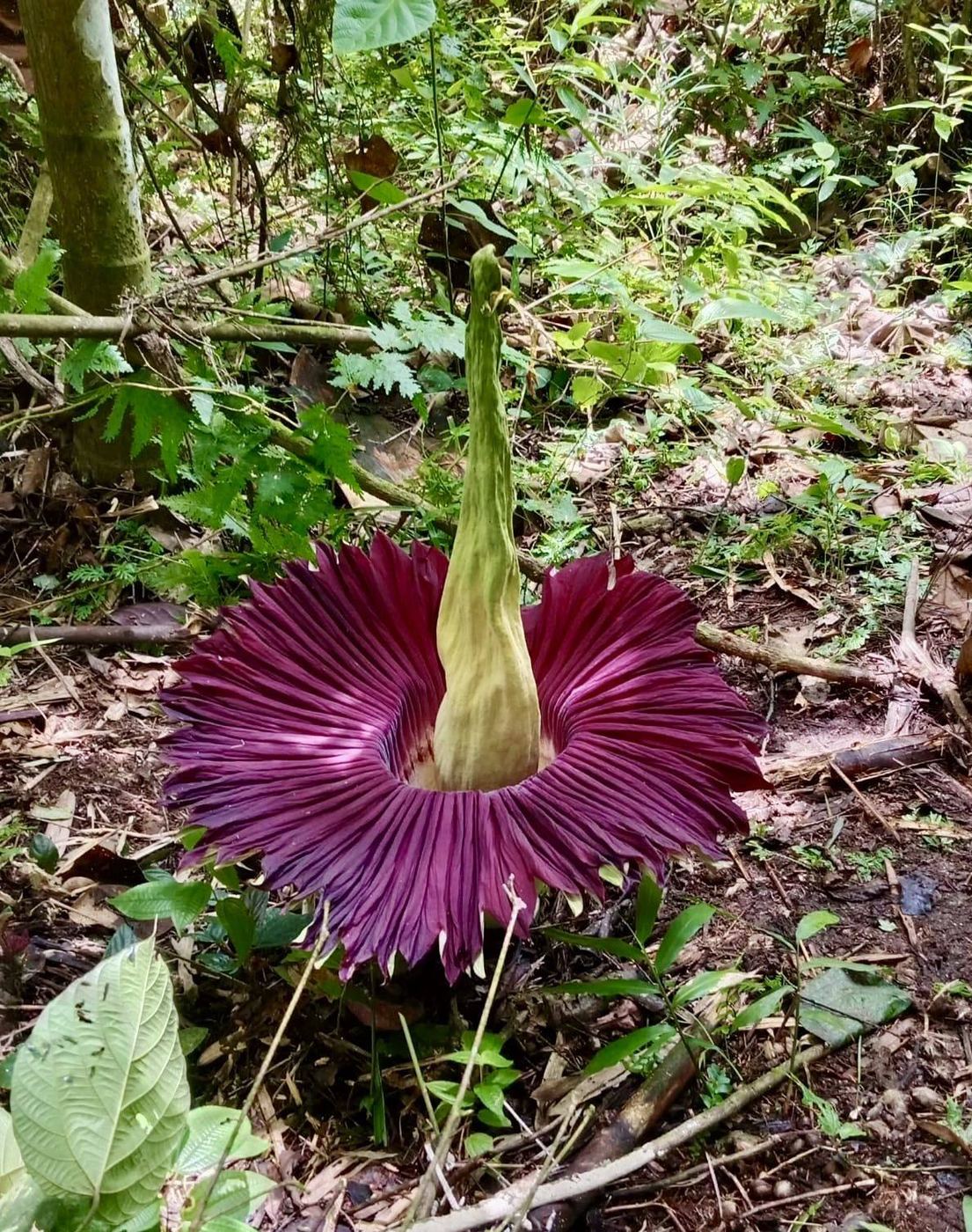
The Titan arum is the tallest flowering structure on Earth. It spends up to a decade storing energy underground before it finally blooms. And when it does, it's open for barely two or three days before collapsing. The Rafflesia, its equally famous neighbour, follows a similarly narrow window.
The Titan arum stores energy in its corm for up to a decade before its first bloom.
The flower opens, releases its scent, and collapses within days. The window is short.
The tallest recorded Titan arum blooms have reached over 3 metres.
The plant's life
What you might see
Our guide checks on the plant at every stage of its cycle. Seeing more than one on a single visit is unusual, and gives a far richer sense of just how strange this flower's life really is.
The underground corm
A single enormous tuber that can weigh over 70 kilograms, living silently underground for years as it stores energy. Sometimes the ground rises slightly where one is active.
The emerging shoot
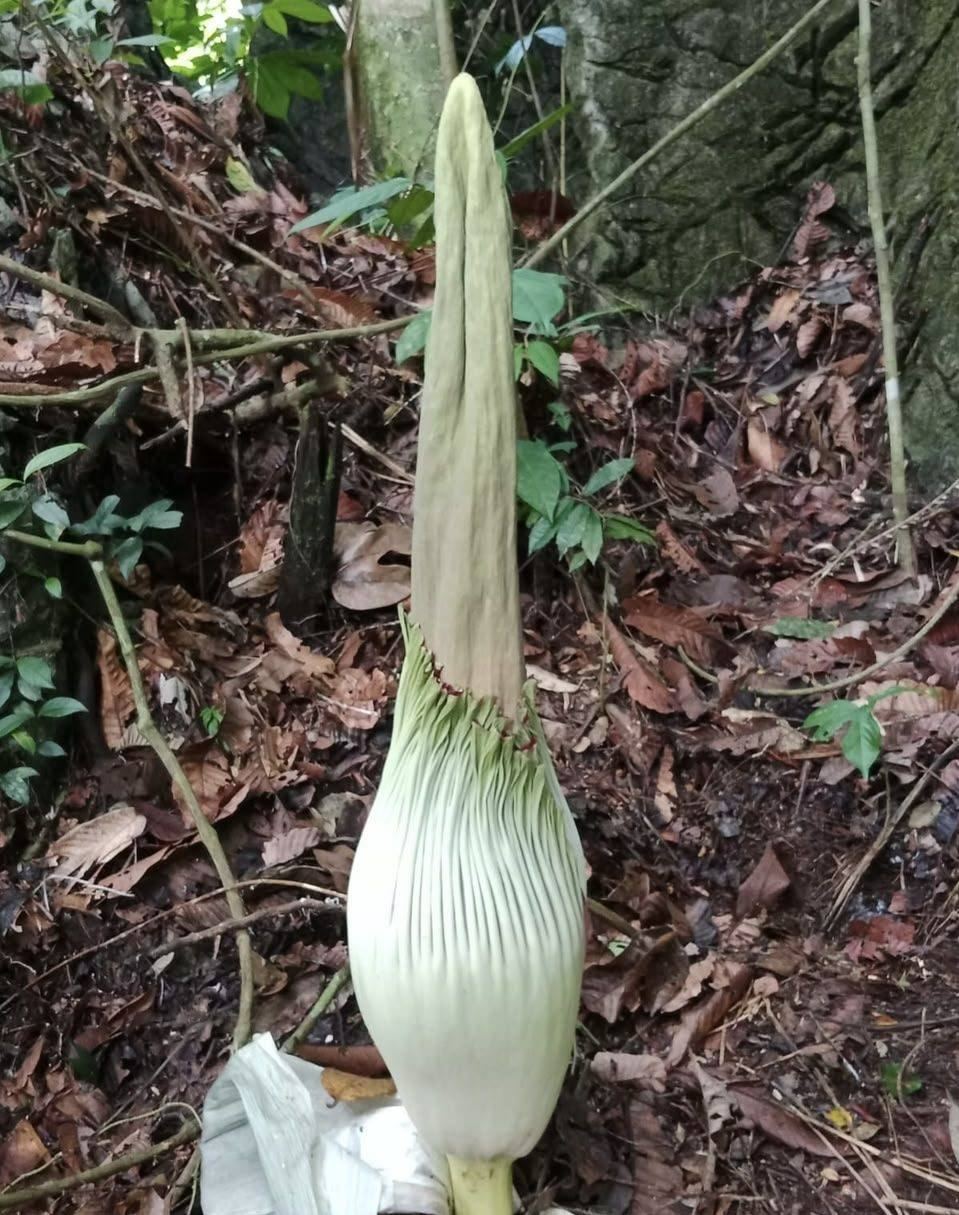
A thick shoot pushes through the ground and begins to swell when the corm is finally ready. Spotting this stage means a bloom could be close.
The bloom
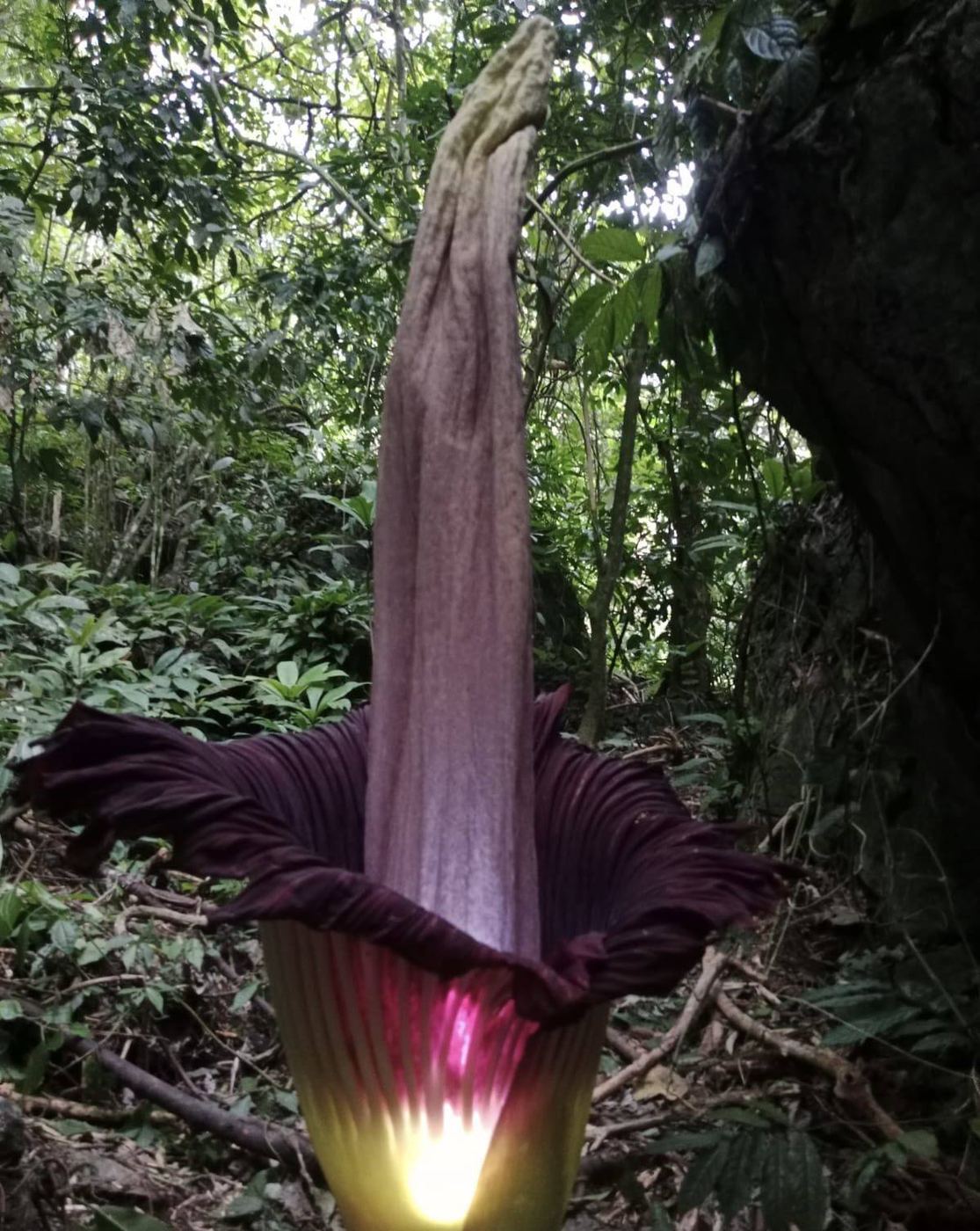
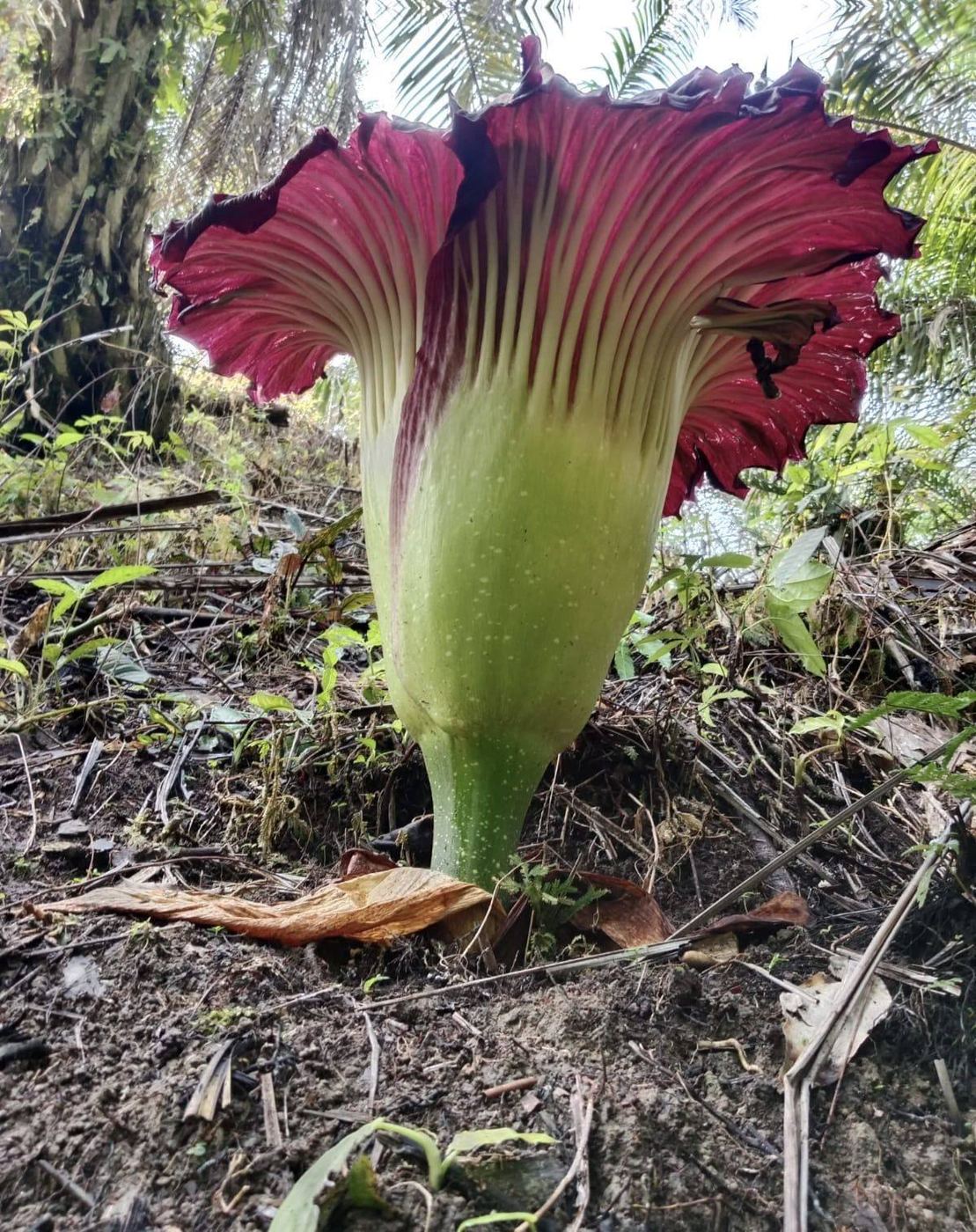
The flower unfurls to reveal its deep burgundy interior and heats itself to near body temperature to carry its scent, a mix of rotting flesh and something faintly sweet, to the carrion insects that pollinate it.
The fruit
After a successful bloom, bright orange-red fruit appears, drawing birds that scatter the seeds. Rarely seen, and striking in its own way.
Good to know: we only confirm this excursion once a bloom has been spotted. We don't take guests out on the chance something might be open. If nothing is flowering during your stay, this simply isn't on the itinerary.
Start to finish
How the excursion works
Pickup
Your guide collects you from your guesthouse in Bukit Lawang, by motorbike or car. Departure time is flexible, arranged around the rest of your day.
The ride to Batu Katak
About 30 minutes along the Berkail river to Batu Katak, a quiet village that sees very little tourism.
At the bloom site
Time to observe and photograph the flower, and hear about its biology from your guide. They'll also look for the plant at other stages nearby.
Return
Back to your guesthouse in Bukit Lawang. Total time out and back is around four hours.
The details
What's included
Included
- A local guide who knows the bloom sites
- Return transport from your guesthouse to Batu Katak
- A search for the plant at every stage: corm, shoot, bloom, fruit
Not included
- Food and drinks
- Accommodation in Bukit Lawang
- Travel insurance
Before you book
Questions about this excursion
How long does the bloom last?
Just two to three days. After up to ten years building energy underground, the Titan arum opens, stays open for around 48 to 72 hours, then closes and collapses. When we confirm a bloom, we move quickly.
What if nothing is blooming during my stay?
Then this excursion simply isn't part of your itinerary. We check the bloom sites regularly, and only take guests out once a flower is confirmed open, never on the chance that one might be.
Is transport included?
Yes. Your guide collects you from your guesthouse in Bukit Lawang and brings you back afterwards, by motorbike or car. The ride to Batu Katak takes about 30 minutes each way.
Can I combine this with a jungle trek?
Yes. This excursion runs separately from the treks, on its own half-day. Many guests do both during their time in Bukit Lawang.
Does it really smell like it's supposed to?
Yes, at peak bloom the Titan arum gives off a strong scent to attract its pollinators, and heats itself to help it travel. It's strongest at night and in the first day of bloom, fading by day two. Whether you find it fascinating or unpleasant mostly depends on how close you stand.
Looking for a jungle trek instead?
From a single day to a full crossing of Gunung Leuser.