
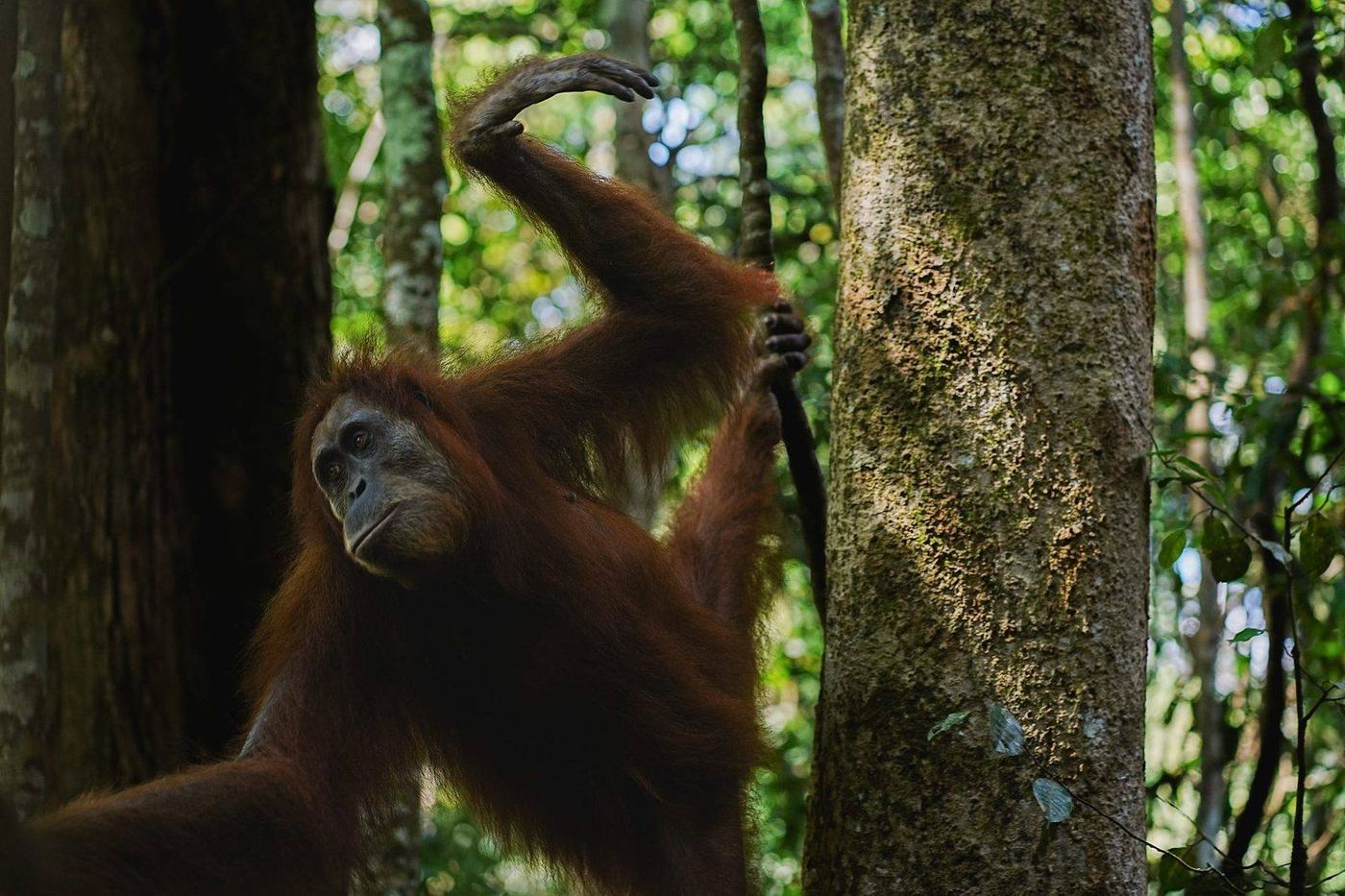
Every trekker who spots an orangutan around Bukit Lawang owes something to a Swiss woman most have never heard of. In 1973, Regina Frey and fellow zoologist Monica Borner set up a small rehabilitation station on the Bohorok river, and the ripple effects of that decision are still what brings people here today.
1973: two young zoologists and a growing problem
At the time, keeping a baby orangutan as a pet was common practice across Indonesia, even though it was illegal. Capturing one usually meant killing its mother first, and for every orangutan that reached a buyer, several more died in the process. Frey and Borner, backed by the WWF and the Frankfurt Zoological Society, set out to reverse a small part of that damage.
Teaching orangutans to be wild again
The Bohorok centre took in confiscated and surrendered orangutans, screened and treated them for disease, and then did something that sounds almost absurd: taught them how to climb trees and build nests, skills an animal raised in a cage or on a chain simply never had the chance to learn. Around 200 orangutans were gradually released back into what became Gunung Leuser National Park.
From rehabilitation centre to trekking destination
Frey and Borner handed the day-to-day running of the centre to Rosalind and Conrad Aveling in 1975, and the rehabilitation programme itself wound down and closed in 2002 as Bukit Lawang grew too popular with tourists to remain suitable for the work. What trekkers see in the forest today are largely the descendants of those released orangutans, along with wild-born individuals, living in the park the centre helped protect.
The work didn't stop there
Frey stayed involved in Sumatra's orangutan conservation long after Bohorok. As president of the Swiss NGO PanEco, she has continued to back the Sumatran Orangutan Conservation Programme, including research and advocacy around the Tapanuli orangutan, the world's rarest great ape, discovered only in 2017 in the Batang Toru forest further south.
It's part of why we take the rules around distance, noise, and feeding as seriously as we do on our treks: the orangutans in this forest exist here at all because of decades of work most visitors never hear about.