
Nobody asks about the food before booking a trek, and it's one of the things people bring up most once they're back. Three days in the jungle, and dinner is somehow one of the highlights.
The daily rhythm
Breakfast happens at camp, by the river, before the day's walk. Lunch is eaten on the trail, carried by the guides. Dinner is cooked at camp as the light goes, eaten by candlelight around a fire.
Day one is different
On the first day, lunch is a takeaway meal the guides pick up from a warung, a small local eatery, on the way. From day two onward, on treks of three days or more, lunch is packed fresh by the jungle mama before you set off.
The jungle mama
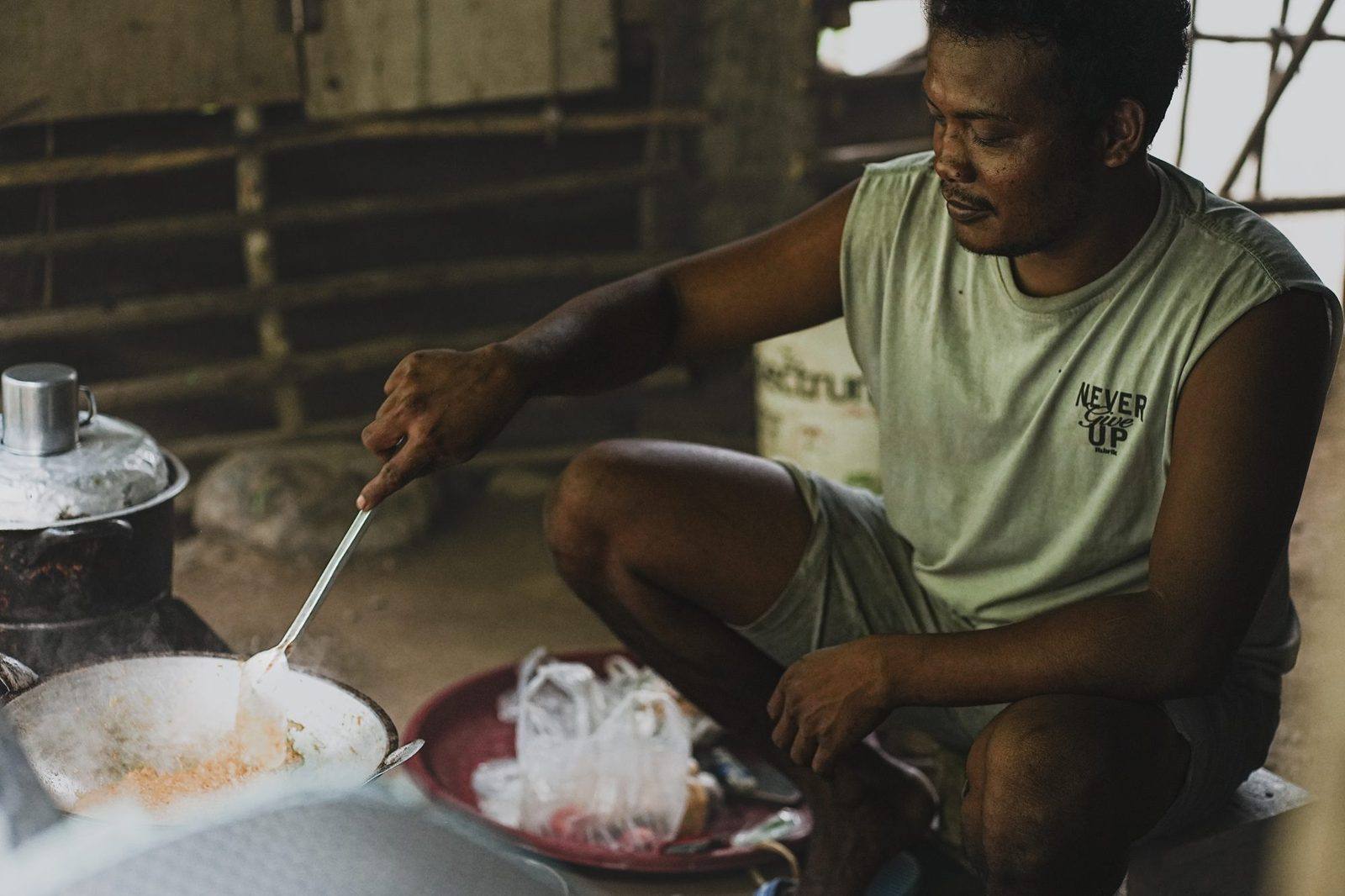
Every dinner at camp is cooked by a jungle mama, who carries the ingredients in from the village and cooks over a fire once camp is set up. Despite the name, jungle mamas are usually men. It's the same person doing this every evening of your trek, not a different cook each night.
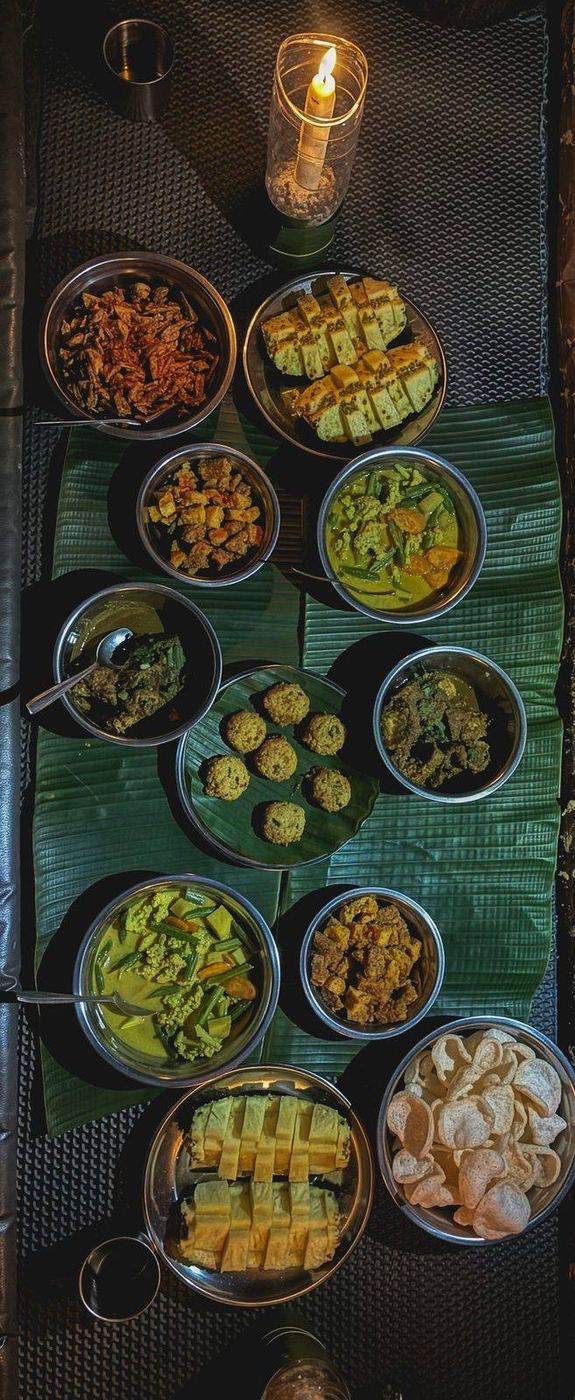
A typical spread might include chicken rendang, a vegetable curry, tofu and tempeh in tomato sambal, potato fritters (pergedel), kerupuk crackers, and a local sambal on the side.
Fruit, more than once a day
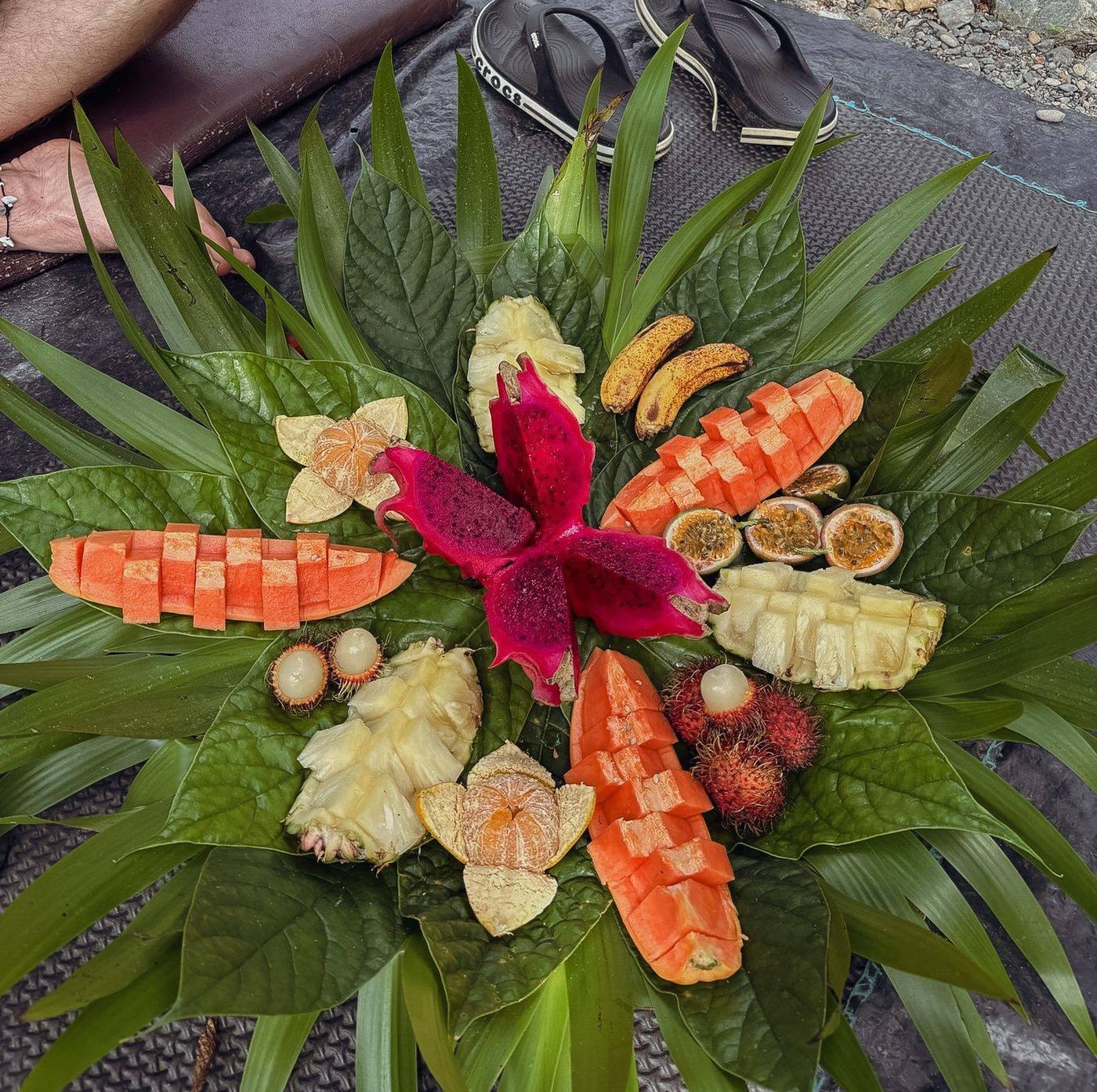
Fresh fruit shows up more than once: during rest breaks on the trail, and again at camp. It's one of the small things that makes the jungle feel less remote than it looks.
You won't go hungry
Portions are generous, always. There's no need to pack extra snacks out of worry that you won't have enough; dinner alone usually settles that fear by the first night.
What happens after dinner
Once the plates are cleared, camp tends to slow down rather than end. Trekkers recap the day around the fire, someone starts singing, out comes a card game. If you're lucky, Karan will pull out a magic trick; more than one guest has been charmed by it.
Vegetarian, vegan, halal, or any other dietary or religious requirement can be arranged; just let us know when you enquire.