
Where you'll actually sleep, wash, and find the toilet is one of the most common unspoken worries before a multi-day trek. The answer is simpler than most people expect.
The shelter
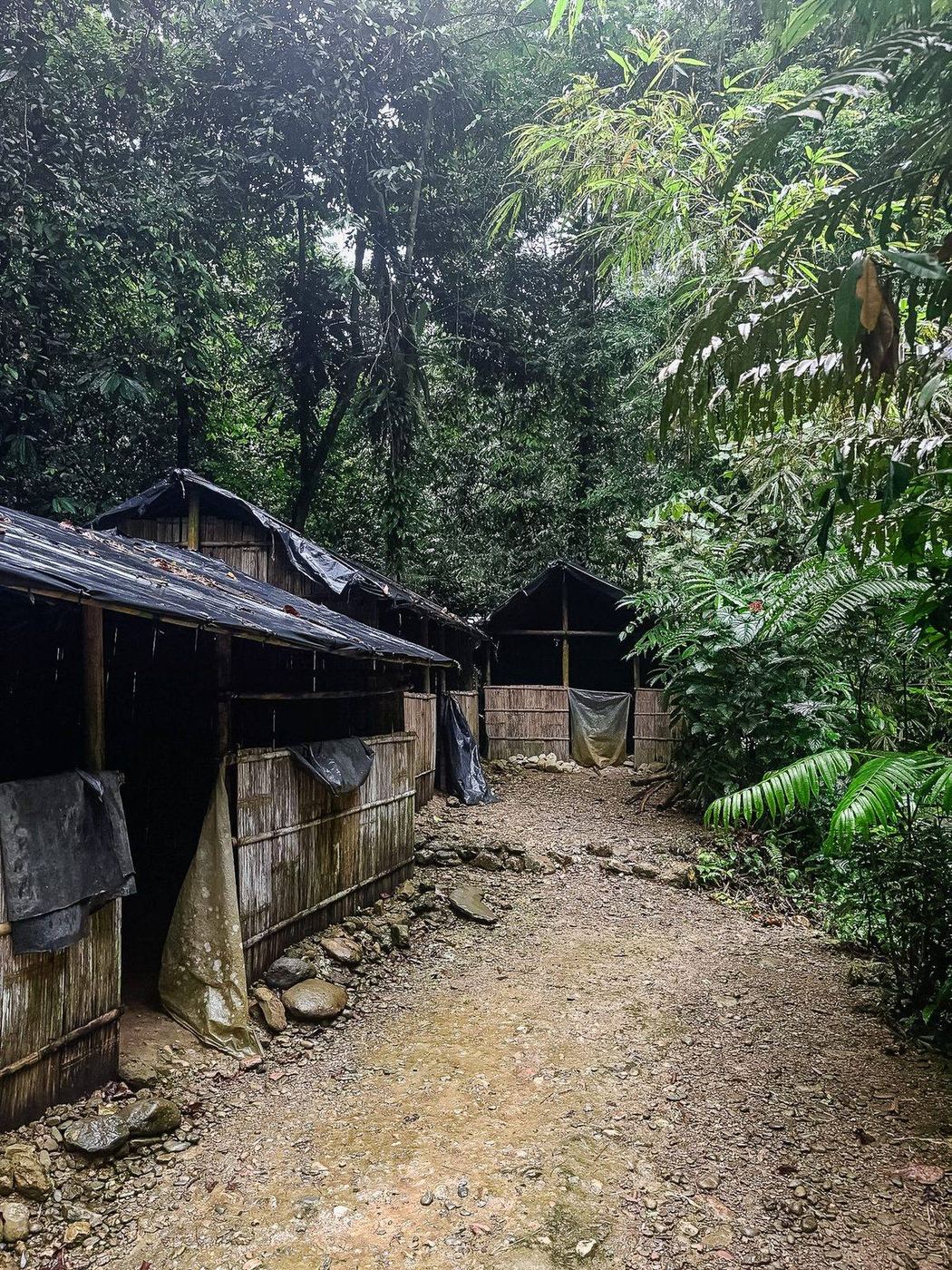
Your trek group sleeps together under one shared shelter with no walls, just a roof and tarps for rain cover. These are fixed structures, built in advance at set spots along the trail, not put up specially for your visit. You won't be sharing it with another group. Camping mats, mosquito nets, a blanket, and a pillow are set up inside before you arrive. It's rudimentary rather than plush, so if personal comfort matters to you, some trekkers bring their own sleeping bag or a silk liner. It really comes down to what you personally need to sleep well.
A different site, when possible
On treks of two nights or more, we try to use a different campsite each night rather than returning to the same one, though this can depend on weather and conditions on the day. Guides don't build anything when you arrive; they simply lead you to that night's site.
Sleeping in the jungle
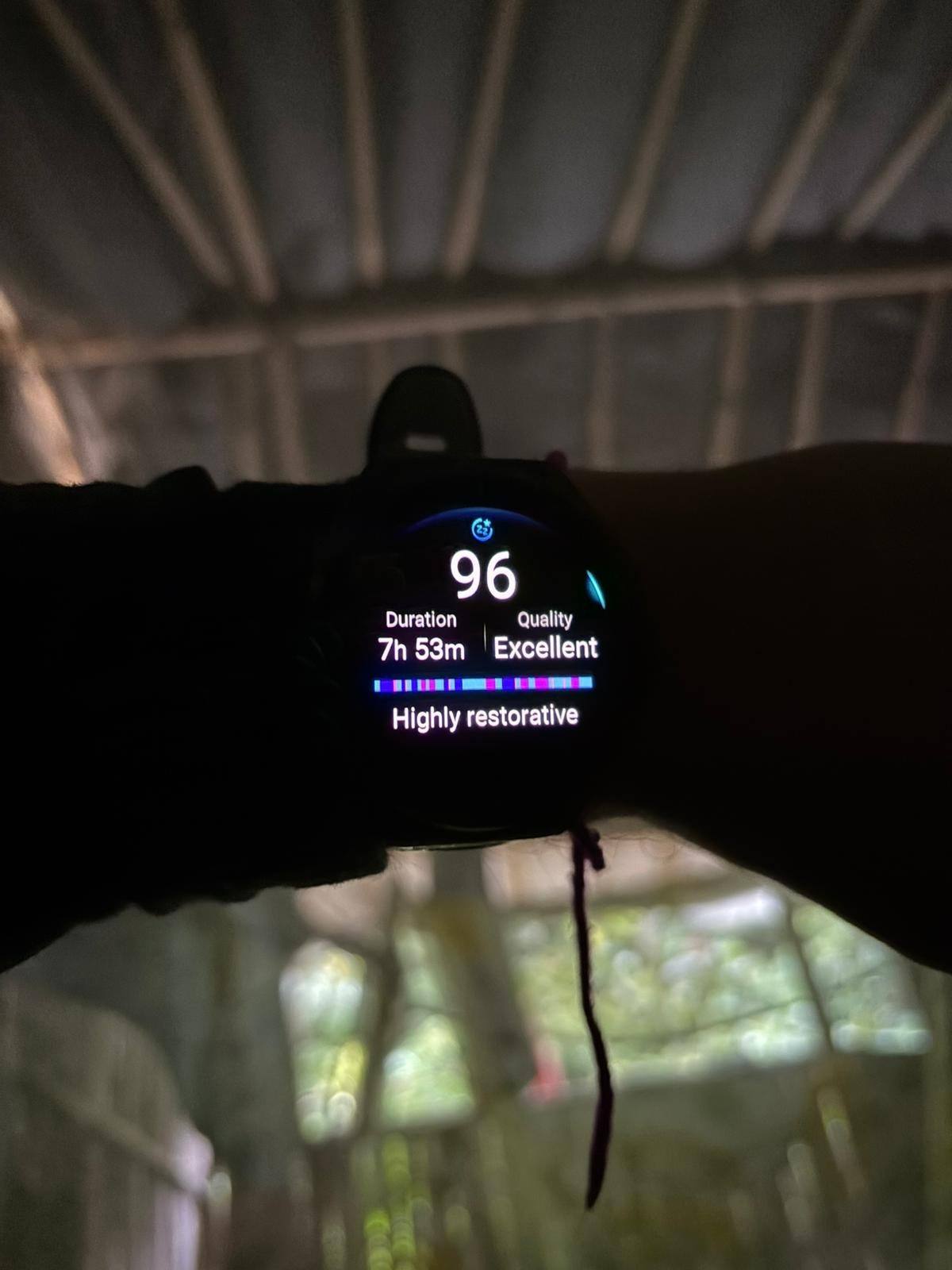
Laura genuinely loves it. The river below, the forest creaking after dark: instead of keeping her up, it lulls her to sleep like nothing else does. Her friend Guillaume, visiting from Switzerland for a trek, has never been much of a sleeper. The next morning, his Garmin watch showed a sleep score of 96, rated "highly restorative." The jungle has its small miracles.
Washing up
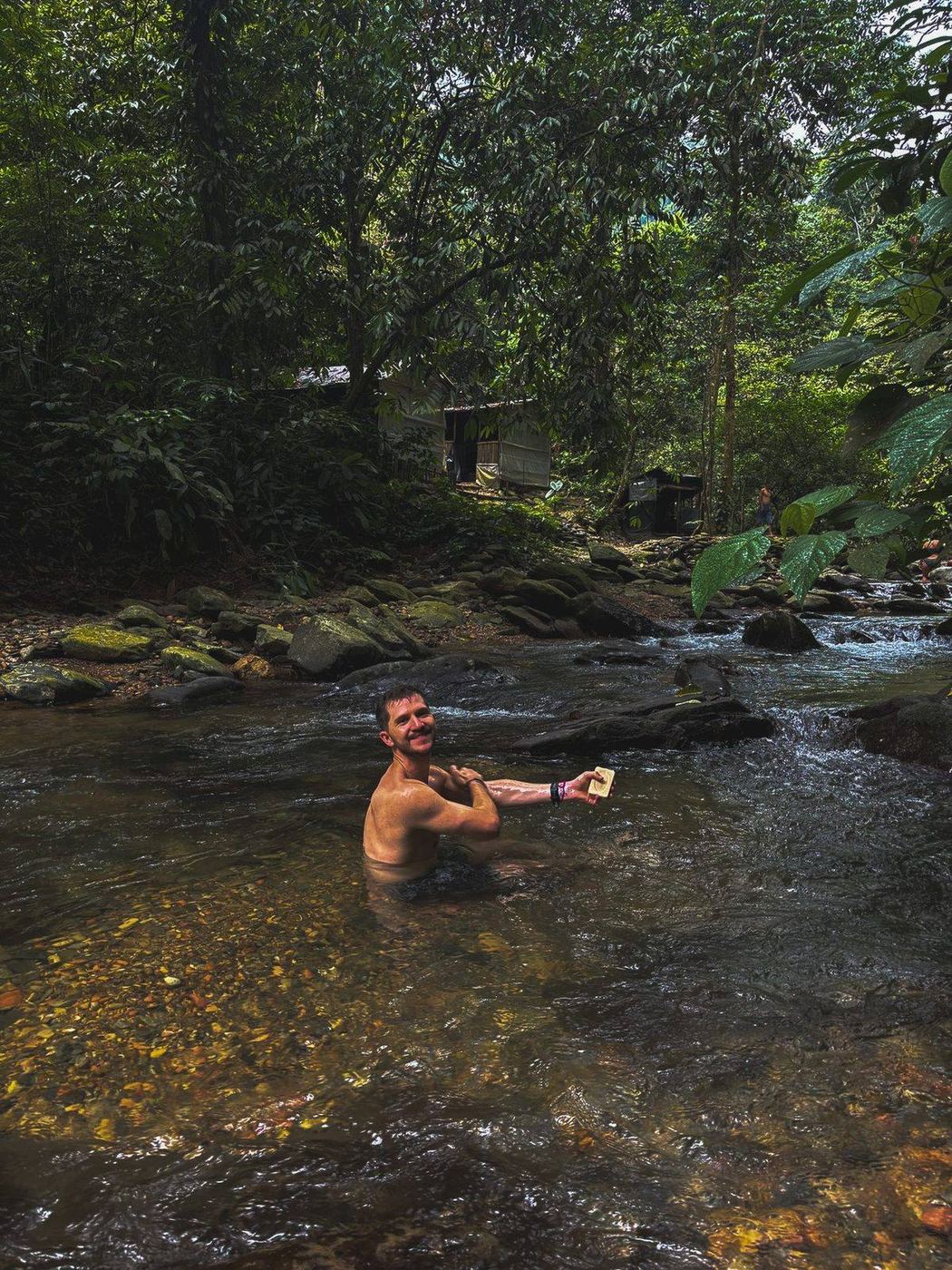
The river is your shower. Most trekkers wash before dinner, while there's still light. The water runs cold, but after a day of walking, it tends to feel like exactly what you need rather than something to dread. If you'd like soap, we can provide an eco-friendly one; just mention it when you enquire.
Toilets
A simple squat toilet is set up at each camp, screened off for privacy, often with a better view than a toilet has any right to. Bring your own toilet paper or baby wipes; there's a bin at camp to dispose of them; nothing goes into the toilet itself.
If jungle camping isn't for you
Some people would rather not sleep in the jungle. For multi-day treks, we can also return to the village guesthouse each evening instead of camping. You won't go as deep into the park on those days, and guesthouse nights are booked separately, but it's a good option for spreading a trek over several days without giving up your own bed.
Just bring a headtorch for after dark; everything else is already taken care of at camp.