
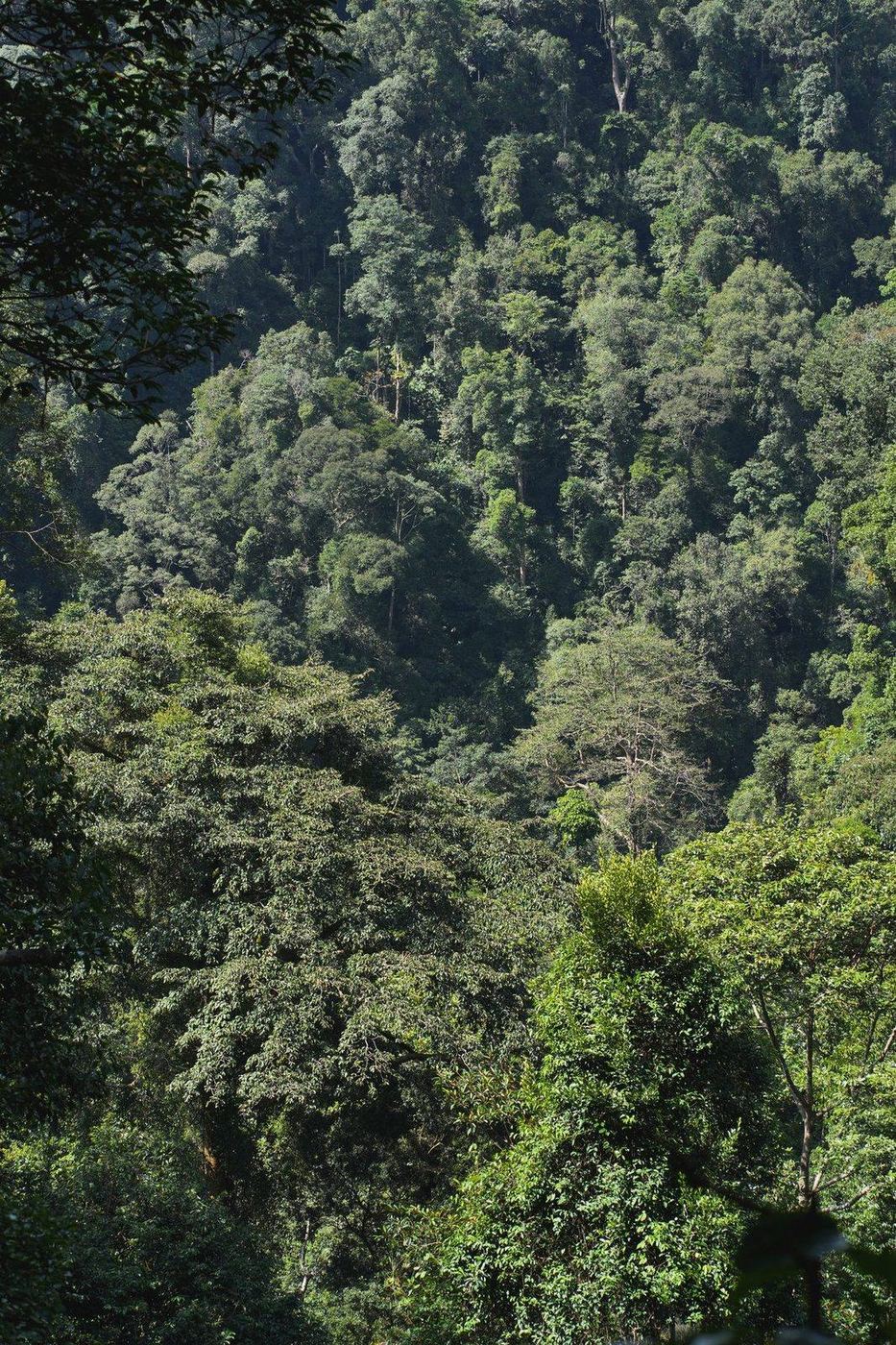
Bukit Lawang sits inside a genuine rainforest, so the honest answer is: there's no bad time to see orangutans here. But if you're choosing between dates, here's how the two seasons actually differ.
High season: June to September
Drier trails, more predictable weather, and, as a direct result, more trekkers on the same paths. This is when most European and Australian travellers visit, so book 2 to 3 months ahead if you can, especially for July and August.
Rainy season: October to April
Treks run exactly as usual during the rainy season: this is a rainforest, and guides are used to it. Trails get muddier and the odd downpour is likely, but the jungle is often more active during this period, and the trails noticeably quieter.
Does rain affect orangutan sightings?
Not really. Orangutans aren't particularly fond of rain. It's rare, but every now and then you might spot one holding a leaf over its head like an improvised umbrella. Rain or shine, we can't promise anything on sightings: these are wild animals, not a scheduled show.
The seasons are shifting too
Worth keeping in mind: these dry season and rainy season patterns are becoming less predictable with climate change. In December 2025, for instance, we had unusually dry weather with very little rain, right in the middle of what should have been the rainy season. Don't plan around the calendar too rigidly, and pack for both conditions whichever month you come.
And elsewhere in Sumatra?
Everything above describes North Sumatra, around Bukit Lawang. The island's climate varies a lot by region: the west coast near Padang is noticeably wetter year-round, the highlands around Berastagi and Lake Toba run cooler with rain that's a bit harder to predict, and the south sees more clearly split dry and wet seasons. If your route takes you further across Sumatra, ask us and we'll factor the region in.
Our take
If your dates are flexible and you'd rather avoid crowds, May, just before the peak season, gives you a good middle ground: drier trails without the peak-season traffic.
Whatever the season, pack a light rain jacket. Even dry-season afternoons in the jungle can surprise you.